


B. AMBIENTE SPAZIALE: “UTOPIE”, NELLA XIII TRIENNALE DI MILANO, LUCIO FONTANA AND NANDA VIGO, 1964-2022
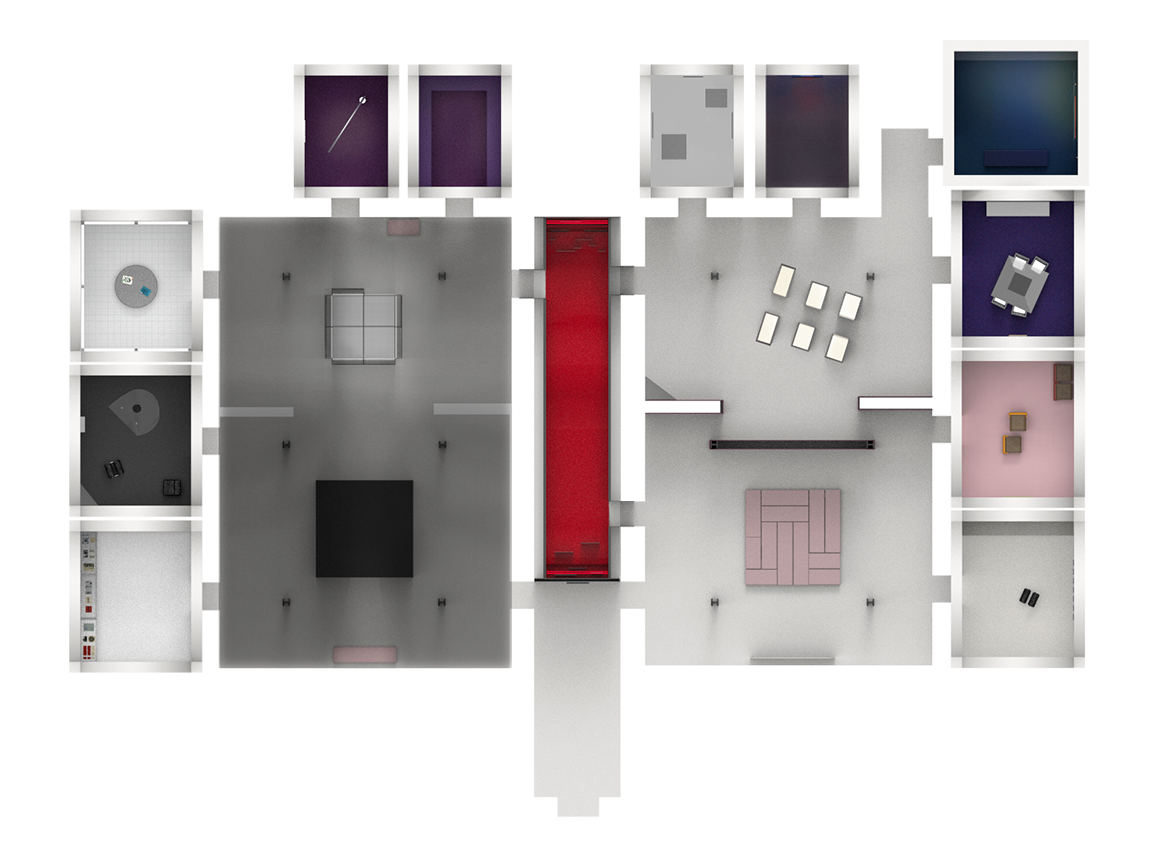
See the localization on the map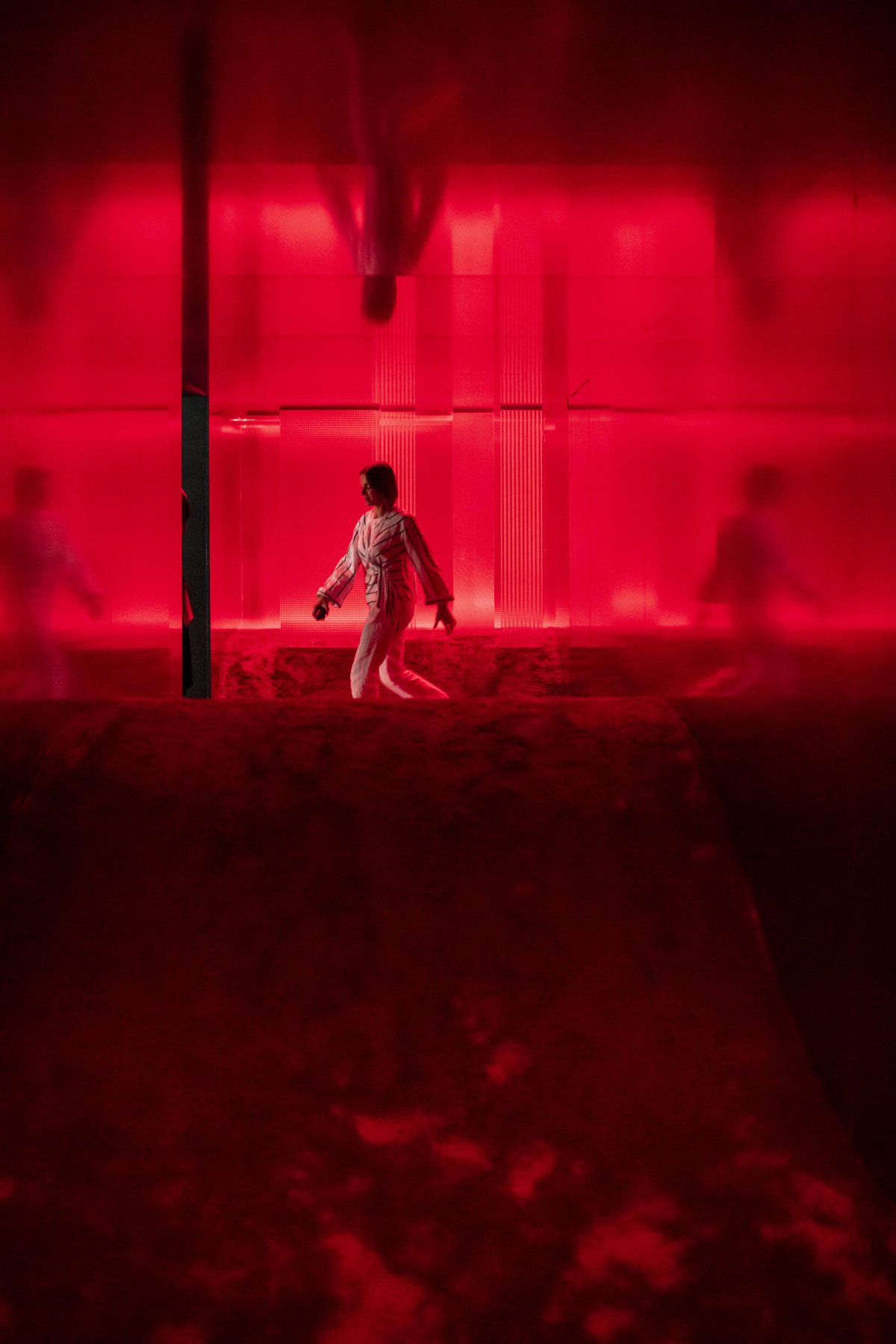
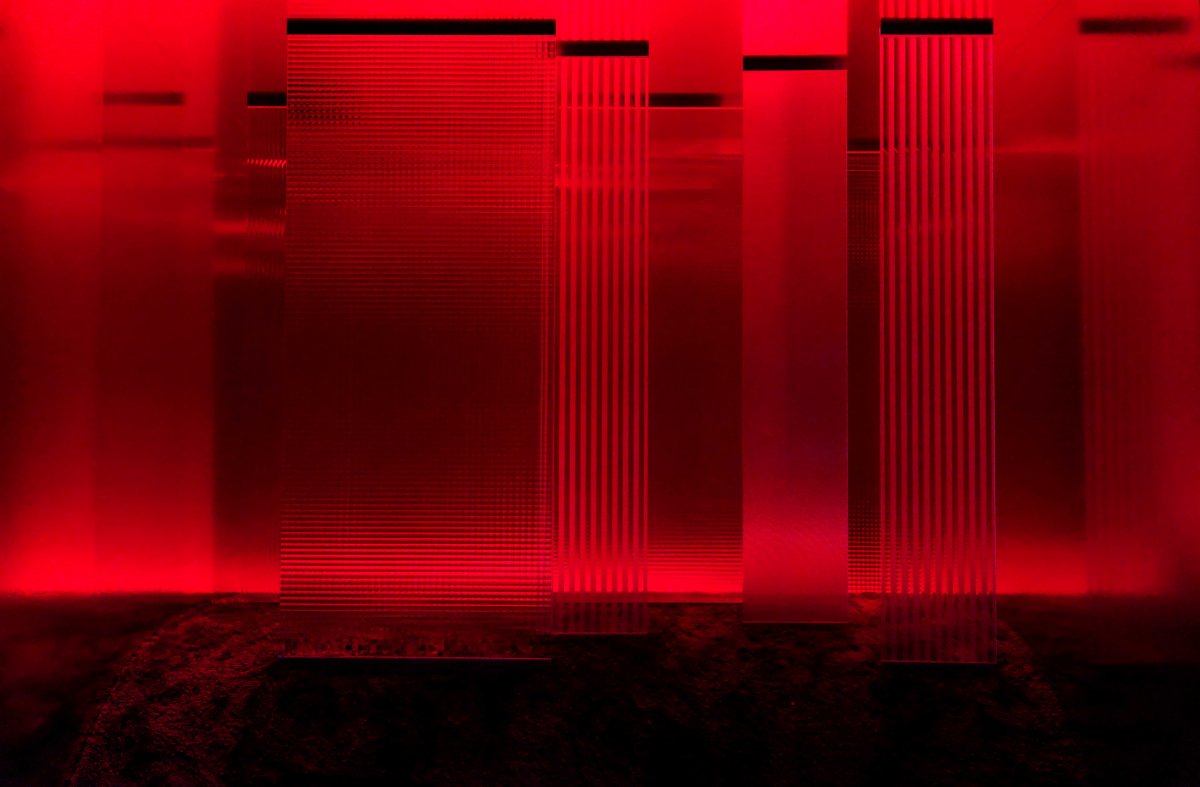
Lucio Fontana and Nanda Vigo, Ambiente spaziale: « Utopie » nella XIII triennale di Milano, 1964-2022 - reconstruction authorized by the Archivio Nanda Vigo and the Fondazione Lucio Fontana, corridor with red metallic covering, corrugated floor with red carpet, 14 printed industrial glass panels; red neon tubes ©Fondazione Lucio Fontana, Milano / by SIAE / Adagp, Paris, 2022 ©Archivio Nanda Vigo, Milano © Photo Frédéric Deval
Presented for the first time in France, this reconstruction is authorised by the Archivio Nanda Vigo and the Fondazione Lucio Fontana.
In 1959, after reading Manifiesto Blanco, Nanda Vigo contacted Lucio Fontana and met him in his studio. At that time, Fontana was one of the most influential artists of the Milanese avant-garde. He was developing an ideology around concepts of time and space, which he materialised through his Concetti Spaziali (spatial concepts) and Ambienti Spaziali (spatial environments). Driven by common research themes – time, space and light – as set out in their respective manifestos, the two soon became collaborators and friends. Alongside architectural projects like ZERO House (1959-62), in 1962 the duo produced their first installation for the exhibition Lucio Fontana: Opere 1949-61, at the International Center of Aesthetic Research, in Turin.
From 12 June to 27 September 1964, the 13th Milan Triennale took place at the Palazzo dell’Arte and Parco Sempione. It was the first Triennale on a specific theme, that of free time, a topical subject for Italy as it experienced major phenomena of social change linked to the process of industrialisation. The exhibition Tempo Libro was curated by writer Umberto Eco and architect Vittorio Gregotti, who invited Fontana to exhibit. Fontana suggested to Vigo that they team up to design two corridors on the theme of utopia, defined as: “the hopes and hypotheses that humanity has formulated in respect of future societies in which man’s dignity and all possibilities for spiritual and physical expansion are recognised.”
The duo came up with a work that was to be the high point of their collaboration: Ambiente spaziale: “Utopie”, nella XIII Triennale di Milano. This large-scale installation comprised two environments, independent of the laws of gravity and proportion, which Fontana had anticipated in his manifestos on spatialism and which Vigo would develop in her chronotopic spaces.

© Valérie Sadoun
© Valérie Sadoun

© Valérie Sadoun

© Valérie Sadoun
Twelve metres long with walls and a ceiling covered in red wallpaper with an aluminium finish, this corridor incorporates technical patterned-glass panels at either end, backlit by red neon tubes. The undulated wooden floor was laid with a thick red rug.

Lucio Fontana and Nanda Vigo, Ambiente spaziale: « Utopie » nella XIII triennale di Milano, 1964-2022
©Fondazione Lucio Fontana, Milano / by SIAE / Adagp, Paris, 2022 ©Archivio Nanda Vigo, Milano
The thick rug and the quadrionda glass are recurring elements in Nanda Vigo’s interiors, while the tactile and chromatic components recall the solutions used by Lucio Fontana in Esaltazione di una forma (1960), as does the feeling of imbalance produced by the undulated floor. Ambiente spaziale: “Utopie” was designed as an imaginary place that invites the viewer to feel free and to dream.